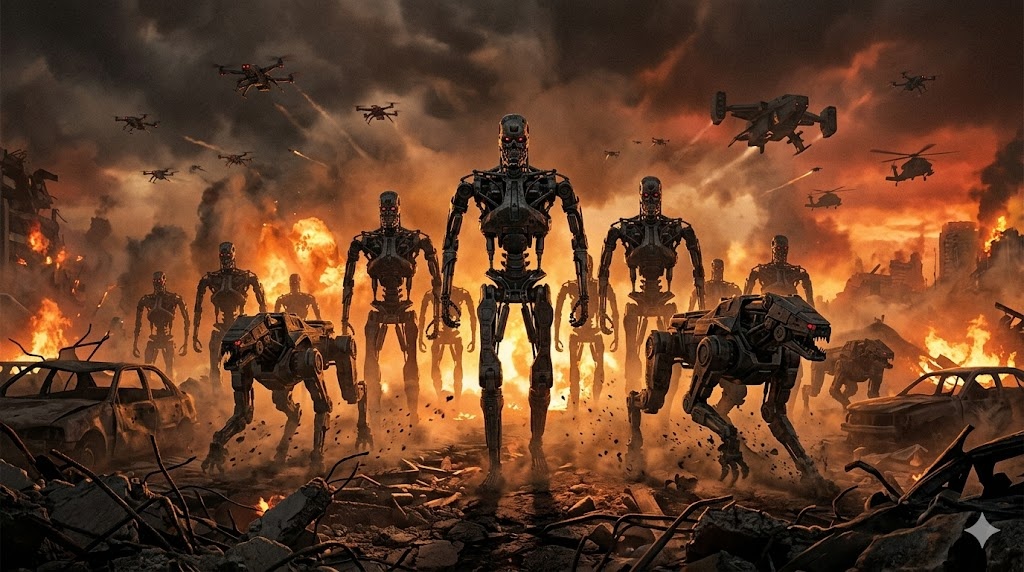
For the first time in the history of war, a military startup says it seized enemy ground using only robots and drones — no human soldiers at all. Machines did the advancing and the fighting. And other defense companies already have AI systems built to handle the final, lethal step of an attack on their own.
Here's the question the industry keeps dodging: when a machine — not a person — makes the decision to kill, who is actually responsible? The soldier? The company? The programmer? Right now there's no clear answer, because the laws meant to govern this simply don't exist yet. The technology arrived first; the rules are nowhere in sight.
So how does it touch you? This may feel far from your kitchen table, but it's the same pattern running through everything: powerful machines handed real-world authority faster than anyone built the guardrails or the accountability. Once we accept machines deciding who lives and dies with no human answerable for it, that line doesn't get un-crossed — and it's our generation quietly deciding to let it happen.