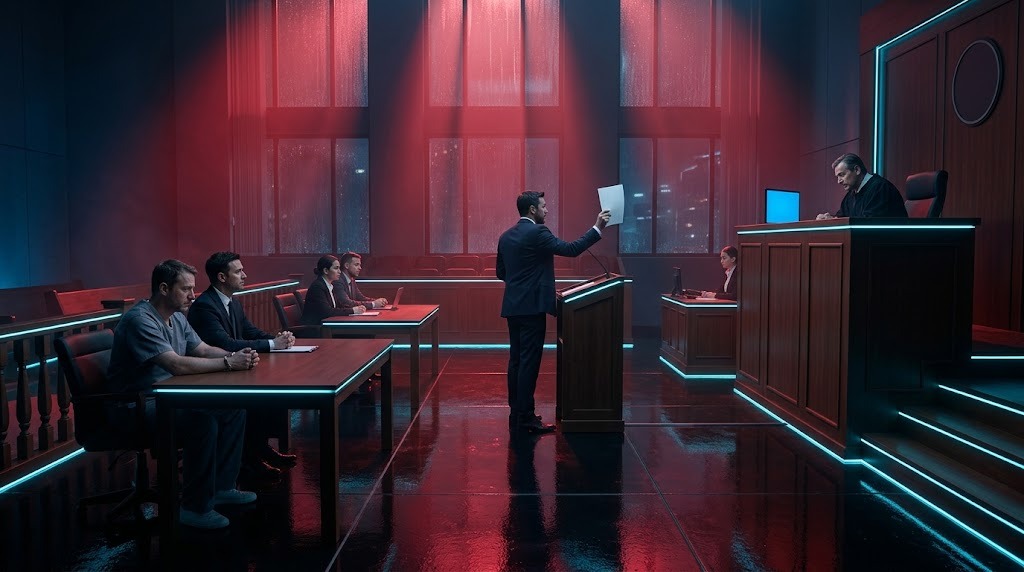
When you're accused of a crime, the prosecutor is the most powerful person in your life. What they tell the judge helps decide whether you sleep at home or in a cell. In Nevada County, California, prosecutors let an AI help write those filings — and the AI invented a court case that does not exist, in a document arguing to keep a man in jail. Not once, by accident: falsehoods ran through four felony cases over two months, and nobody in the office caught them.
Here's the part that should bother you most: a young prosecutor wanted to come clean. She says she asked to report the errors and apologize to the court, to the defense, to the people the filings were used against — and her supervisor told her no. The office had no AI policy, no training, and leadership pushing first-year lawyers to use the tool anyway. When the mistakes surfaced, the office's first move was to argue it should be shielded from punishment.
So how does it touch you? A private lawyer who files a fake AI citation pays a fine. When a prosecutor does it, somebody can lose their freedom — and the machine's confident nonsense arrives wearing the authority of the state. The California Supreme Court has now forced the door back open on sanctions, and a judge has been appointed to find out how deep it goes. The question every county should be asking is the one Nevada County never asked: who is checking the machine before its words become the reason a person stays in a cage?