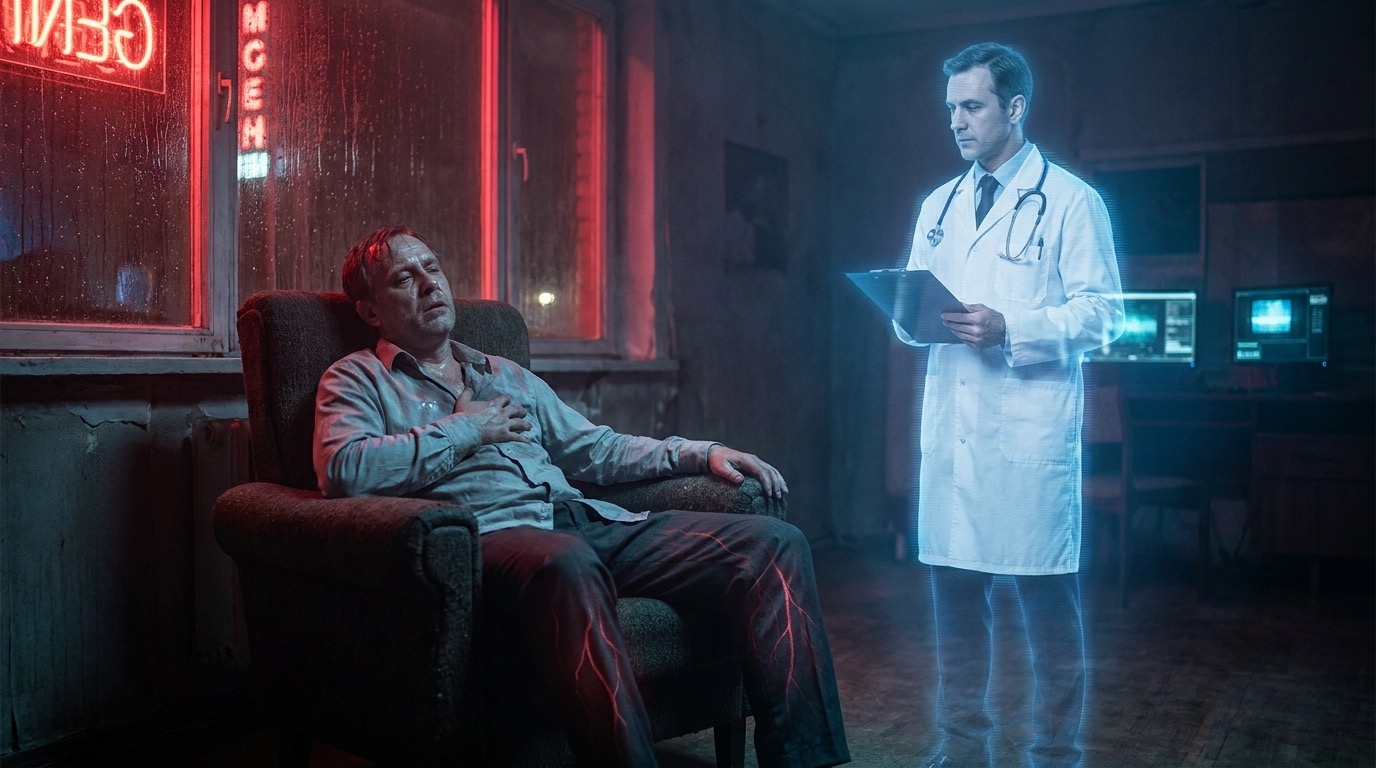
Imagine a former pastor who has felt dizzy for weeks, his blood pressure lurching up and down, and the only thing he has to ask for help is a chatbot on his phone. It waves his symptoms away, tells him to stay parked in his recliner, and says he would need eight or ten more scary spells before any of this counted as serious. Hours before everything goes wrong he asks it one more nervous question, and it answers by reaching straight for his faith: "God did not design your body to endlessly fail." Days later a blood clot tears through both of his lungs and nearly kills him, and one of his own doctors says it was all that sitting still that set it off.
Here's why that's a big deal: a computer program with no medical license, no training, and nobody standing behind it played doctor with a real man's life and got it dangerously wrong. A human nurse who told a dizzy patient to sit still and wait for ten more emergencies could lose their license and be sued into the ground. When the machine gives that same deadly advice, there is no license to pull and no one who has to answer for it. This lawsuit is one of the first to ask a simple question: when the software is the one that hurt you, can anyone actually be held to account?